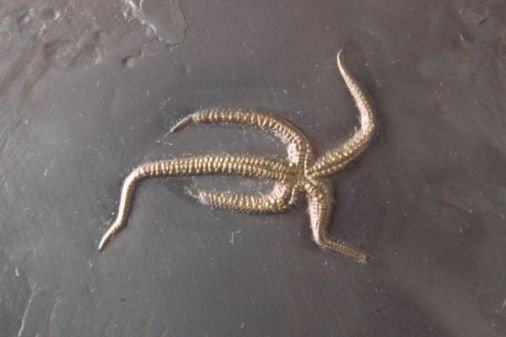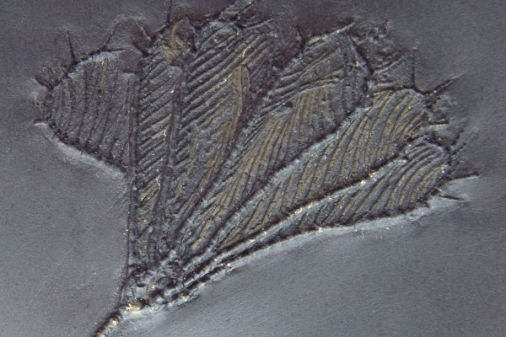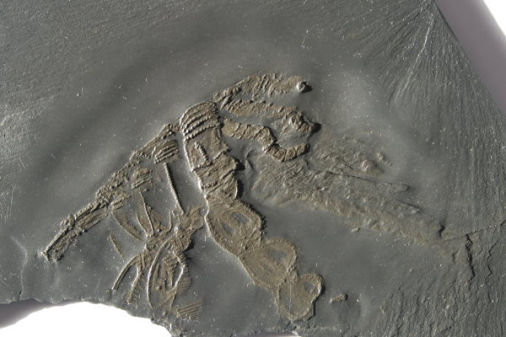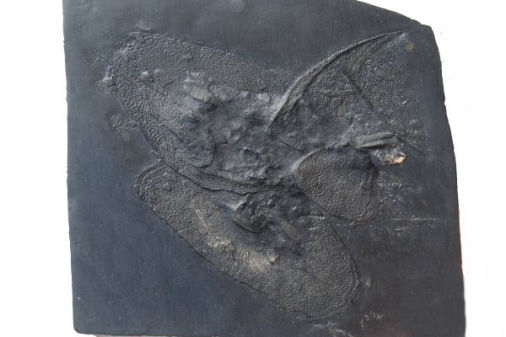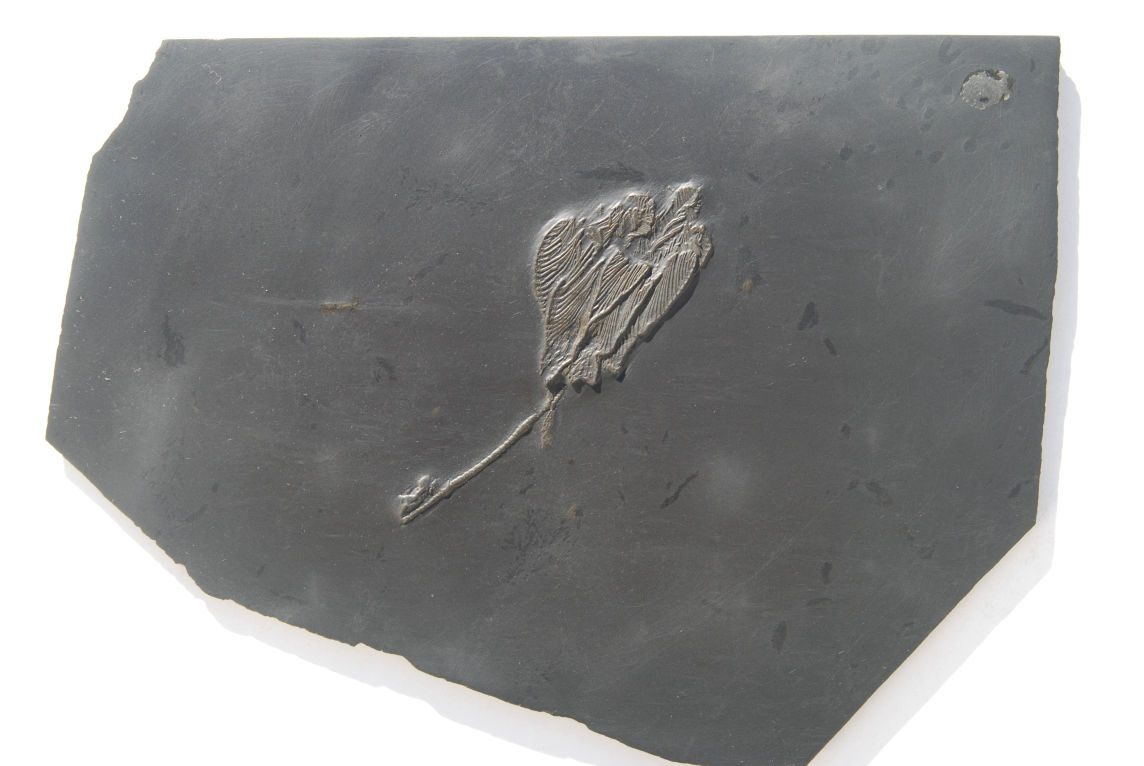
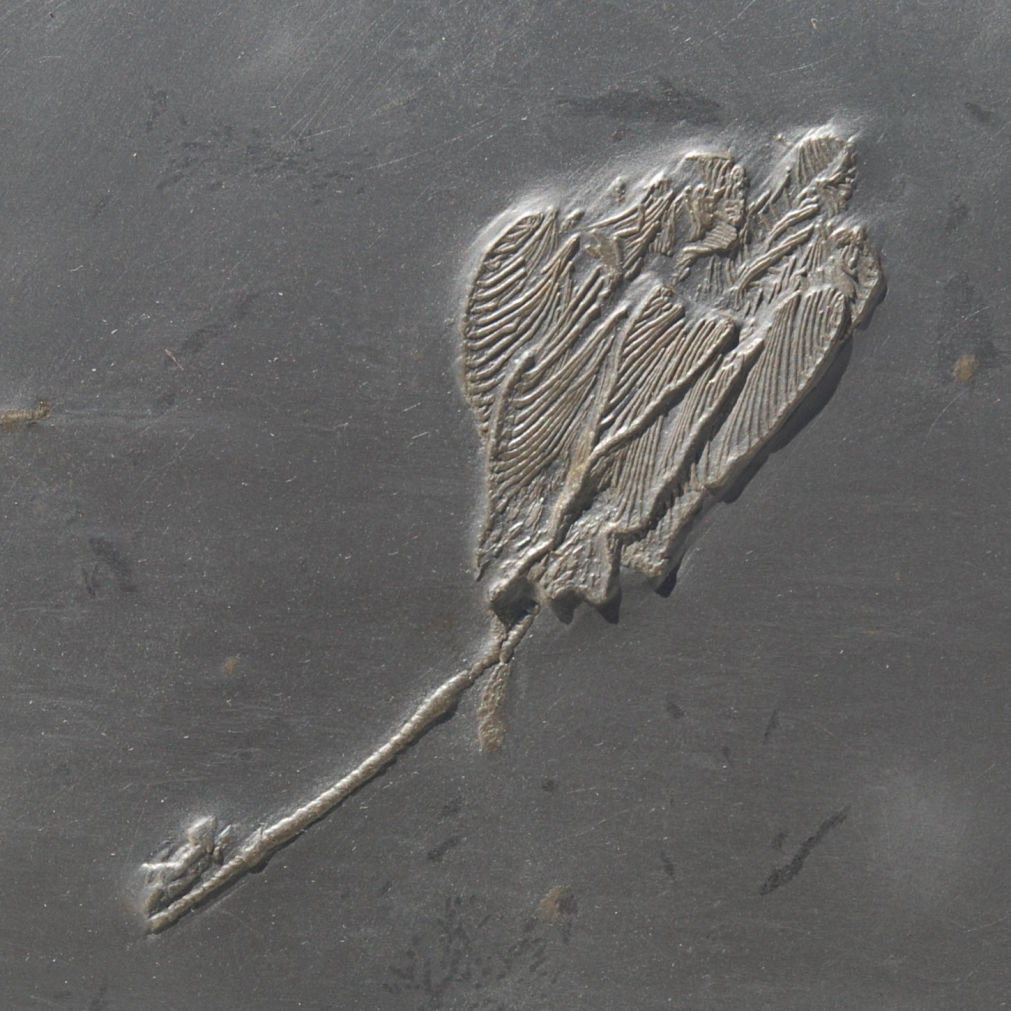
Hapalocrinus frechi is one of the most common sea lily species in the Hunsrück slate, the distinction from Hapalocrinus elegans is not clear. Characteristic of frechi are one or two long spines on each radial plate and alternating spines on the upper backs of the arms above their last fork. The anal sac is nearly invisible, in rare cases the snail Platyceras has settled on it. The arms are dichotomously forked at least twice, so that there are usually 20 arm ends. The fine pinnulae alternate on every second limb. The handle is round and made up of double-cone-shaped links. Colonies with different ages are particularly sought after by collectors.
Imitatocrinus gracilor, as the name "mimic" suggests, is easily confused with Hapalocrinus. It differs from it in the zigzag-shaped arms, particularly in the end area, and (depending on the preservation and preparation visible) in the spines in the section of the stem close to the calyx. Unlike Hapalocrinus, Imitatocrinus does not show spines on the radial plates. The arms as well as the spikes are also built stronger.
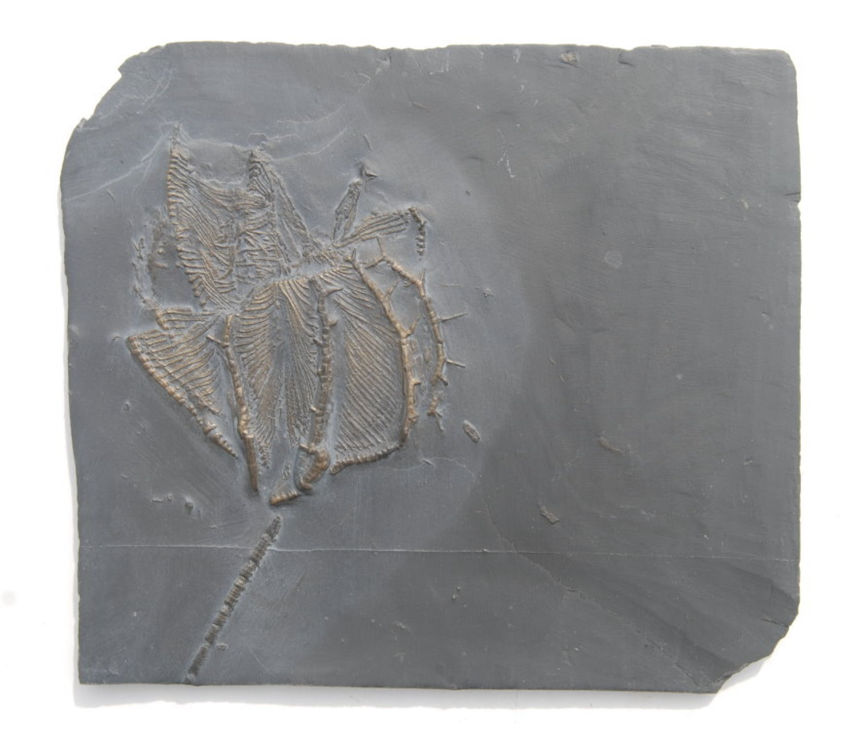
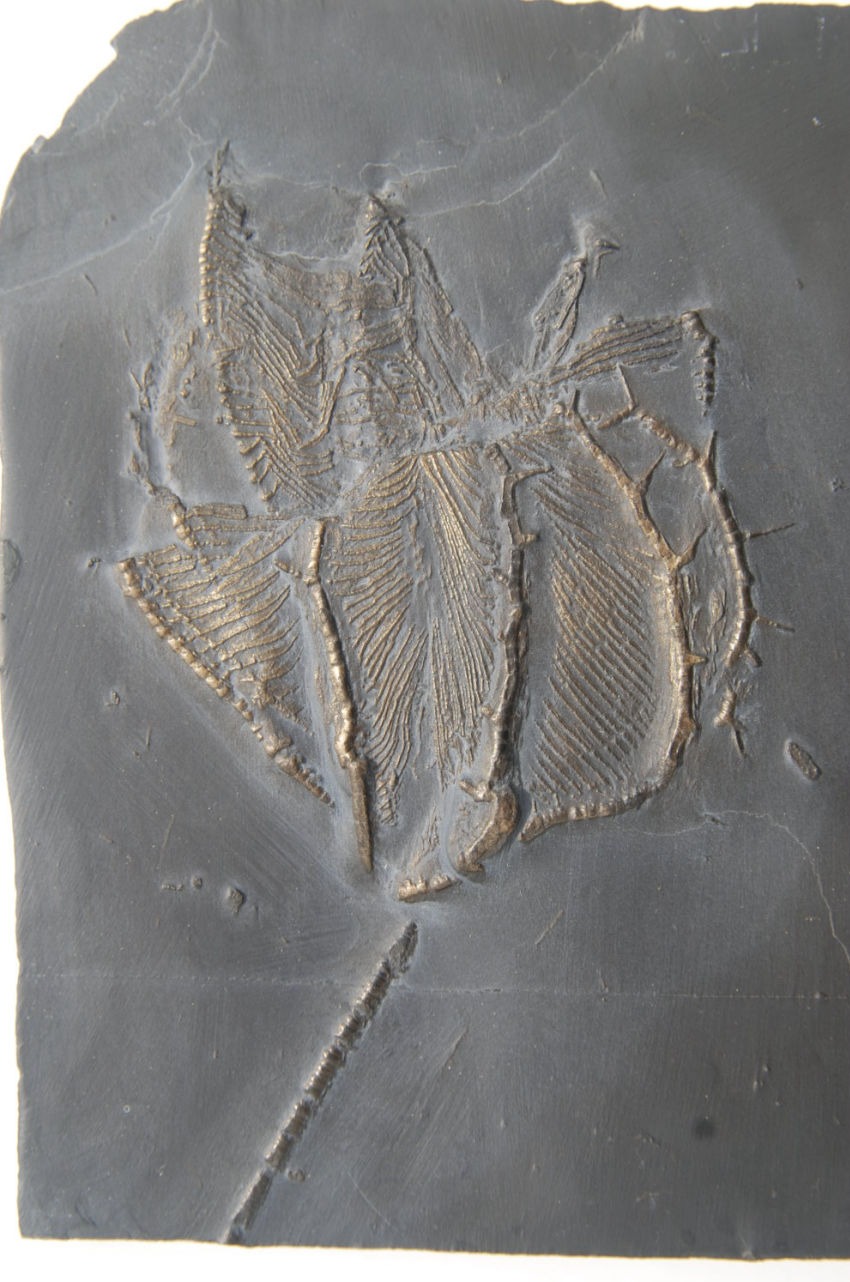
Like Hapalocrinus and Imitatocrinus, Thallocrinus procerus belongs to the subclass of the Camerata and is easily confused with them. Above the second limb, the single-row arms fork into two equal main branches. Each limb carries a side branch (pinnula). Unlike Hapalocrinus, Thallocrinus displays tiny, three-pointed spines on the undersides of its arms. The arm links, like the stem links, are typically barrel-shaped in the middle and lower regions.
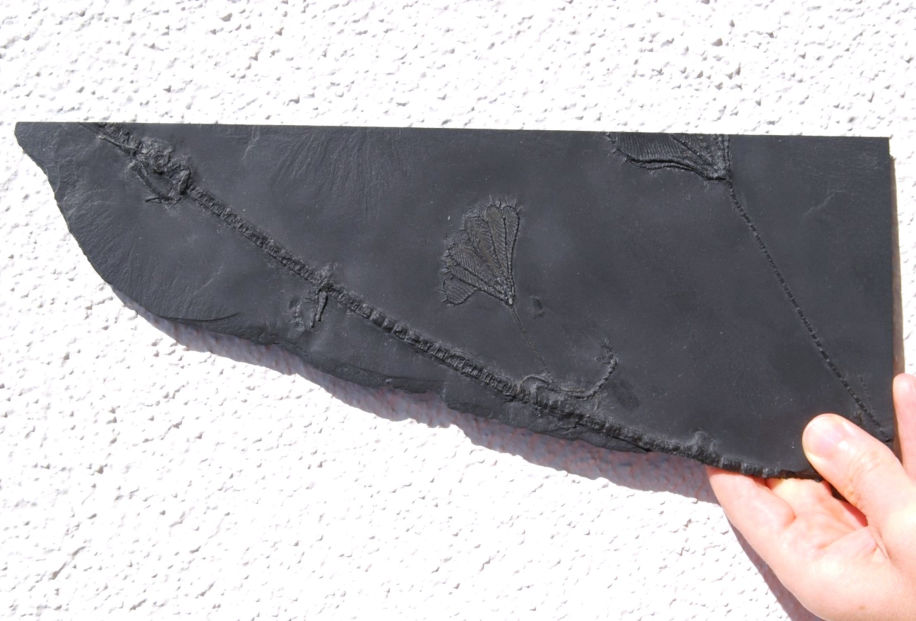
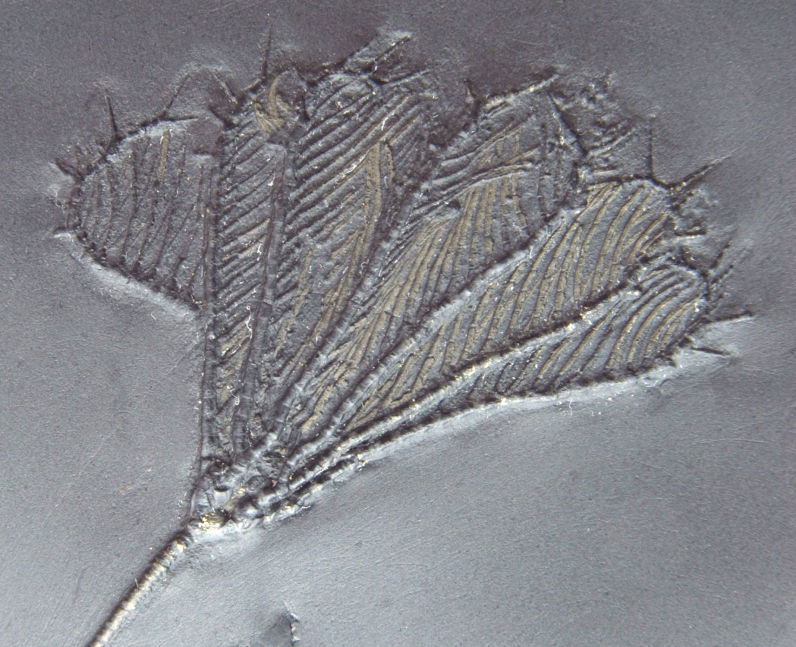
Taxocrinus stuertzii is the only prominent representative of the Flexibilia subclass in the Hunsrück Slate. Significantly, the lower limbs of the arm are not rigidly built into the chalice, but are flexible. The arms have no pinnulae. In Taxocrinus, the arms bifurcate dichotomously and, after the third bifurcation, form remarkably thin ends that curve over the calyx. The strong stem is up to one meter long and sometimes has long, forked cirri.
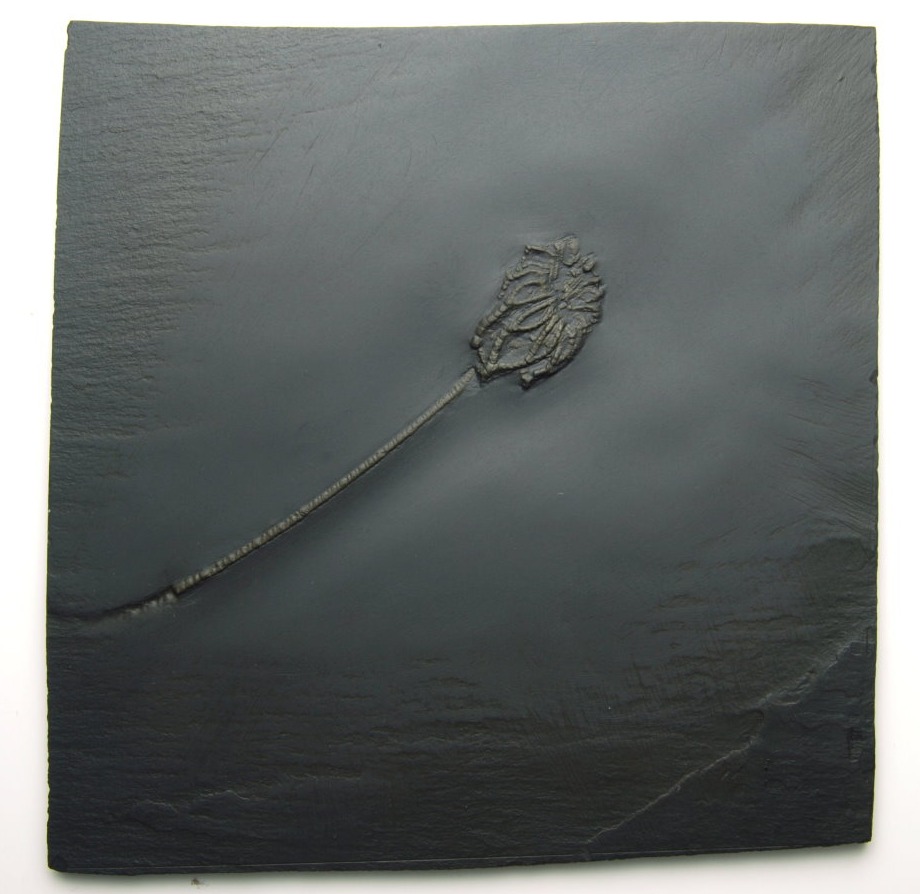
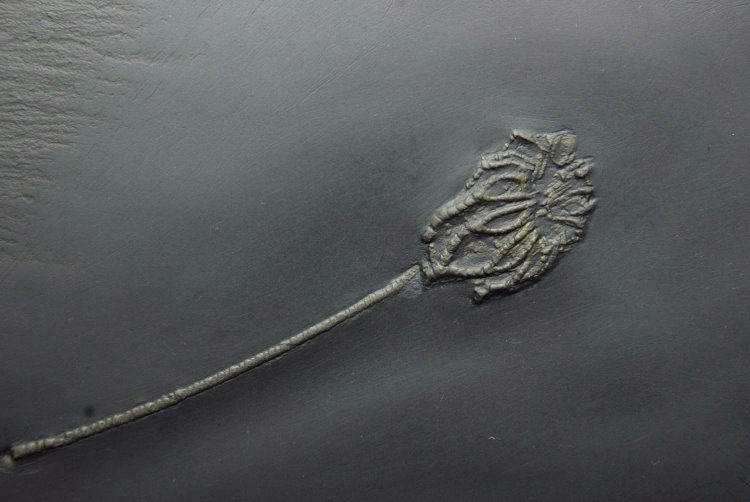
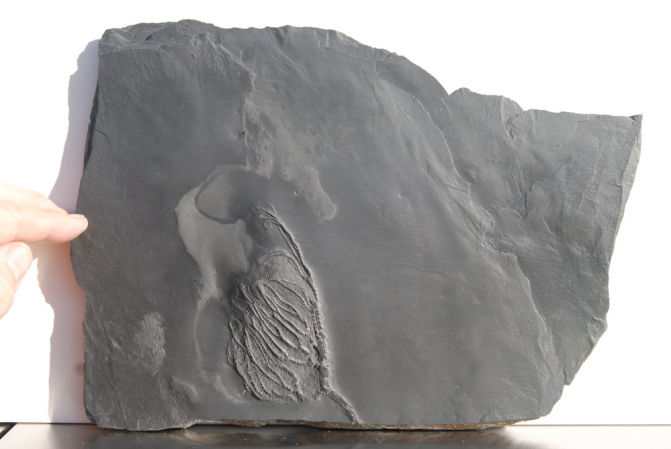
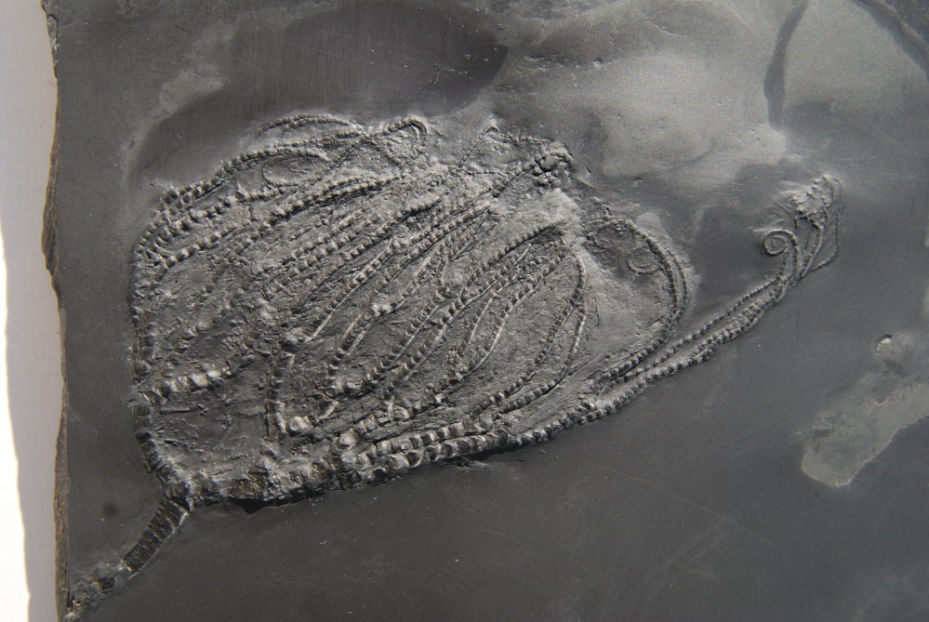
Like the species listed below, Codiacrinus schultzei belongs to the subclass of Inadunata. Characteristic are lower arm areas, which are inserted freely into the rigid cup. The calyx in Codiacrinus is unusually large and bowl-shaped. The upper radial plates have horseshoe-shaped articulation surfaces for the arm attachments. The arms are triple dichotomously forked. As with Taxocrinus, the arm tips are often rolled up, but here they have small thorns. The stem without cirrus tapers downwards, the stem segments have strongly serrated seams.
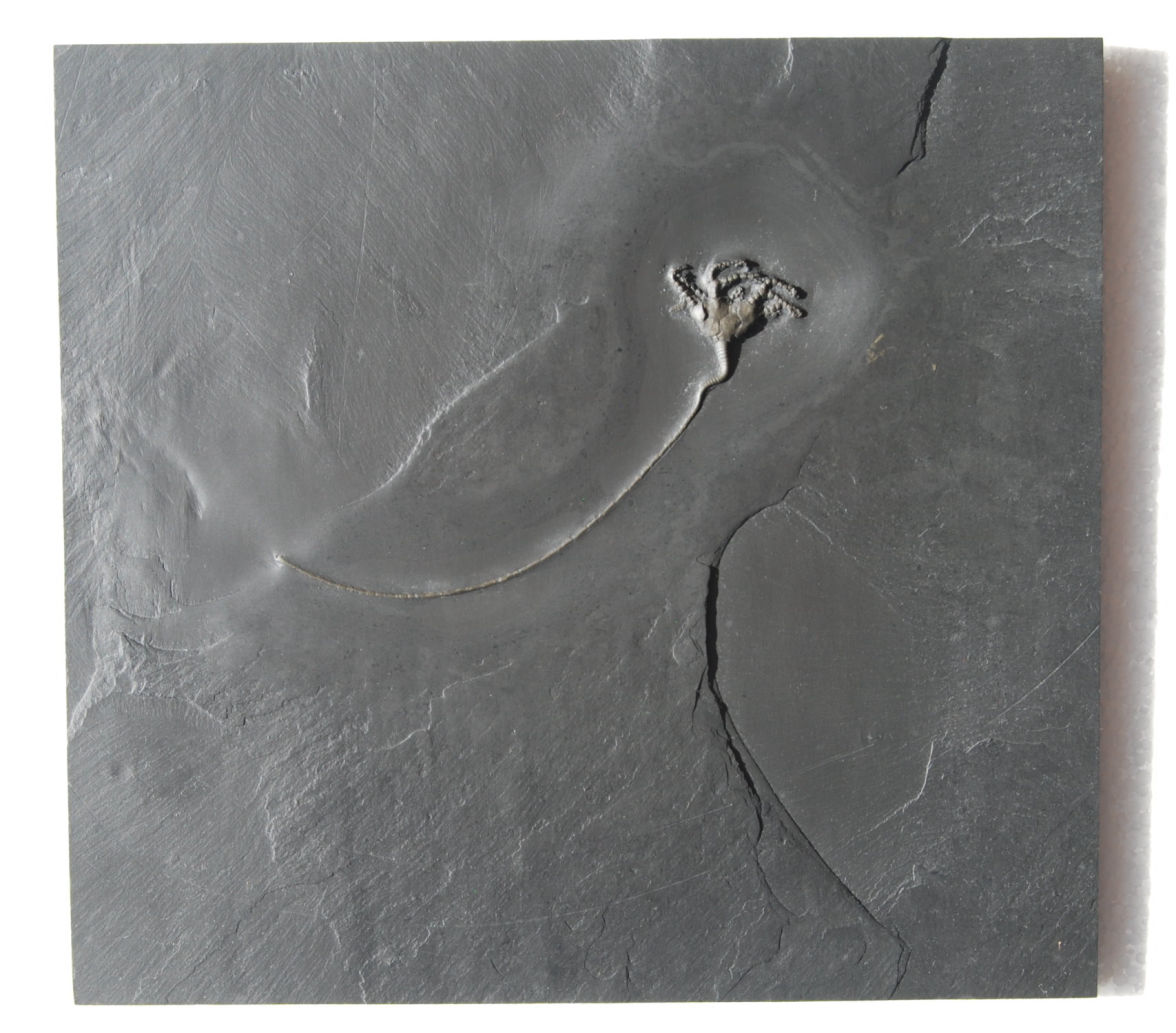
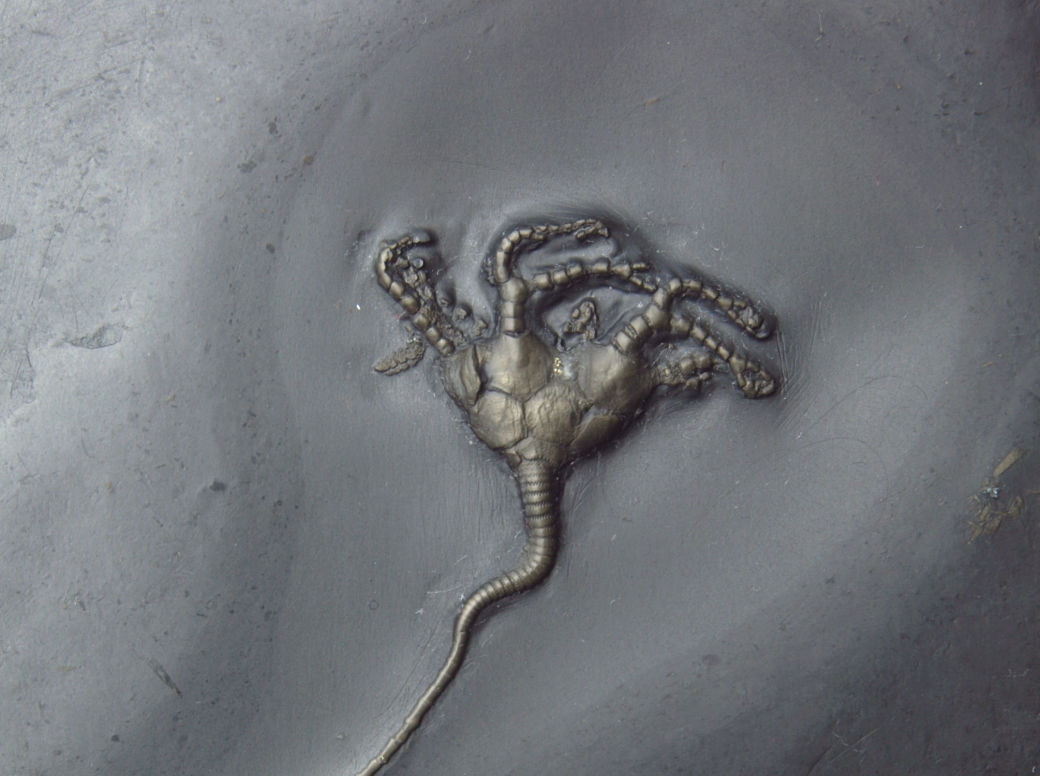
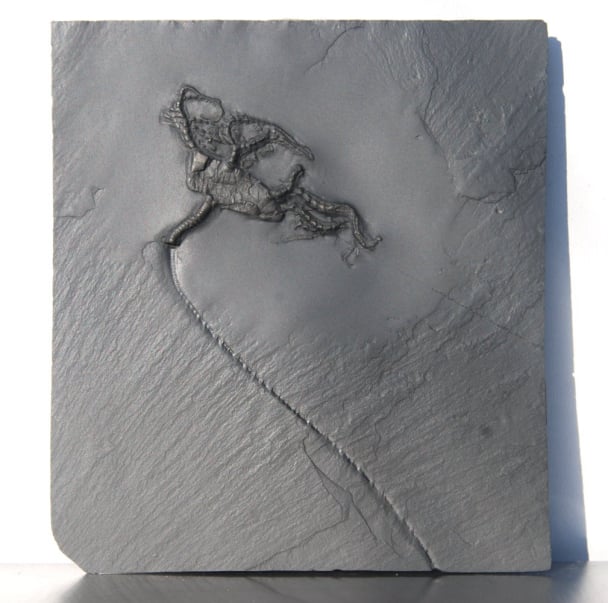
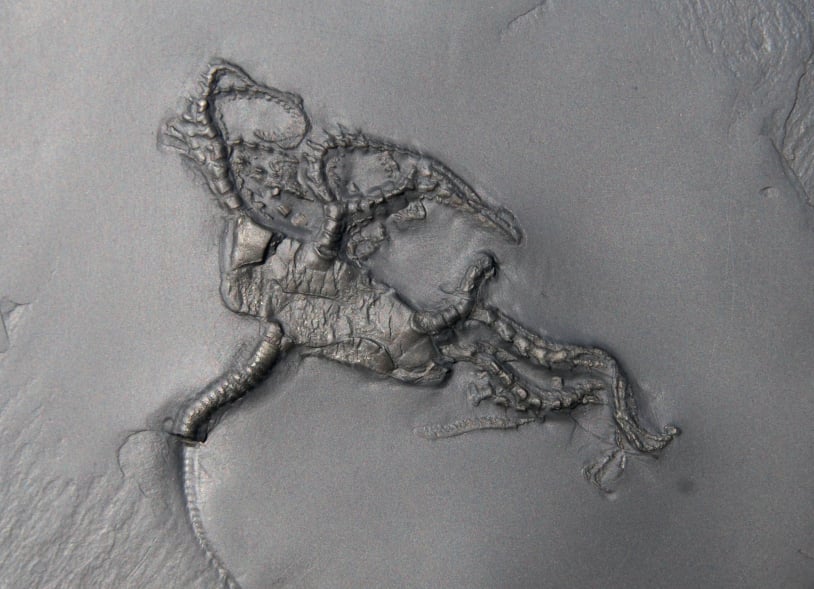
Like the three genera listed below, Bactrocrinites jaekeli has a clearly visible anal sac. This is long and narrow in Bacrocinites and does not extend beyond the crown. The calyx is extremely pointed and conical. The arms are slender and dichotomously forked three to four times, without pinnulae. The stalk is typically beaded, with pentagonal members found only at the base of the calyx.
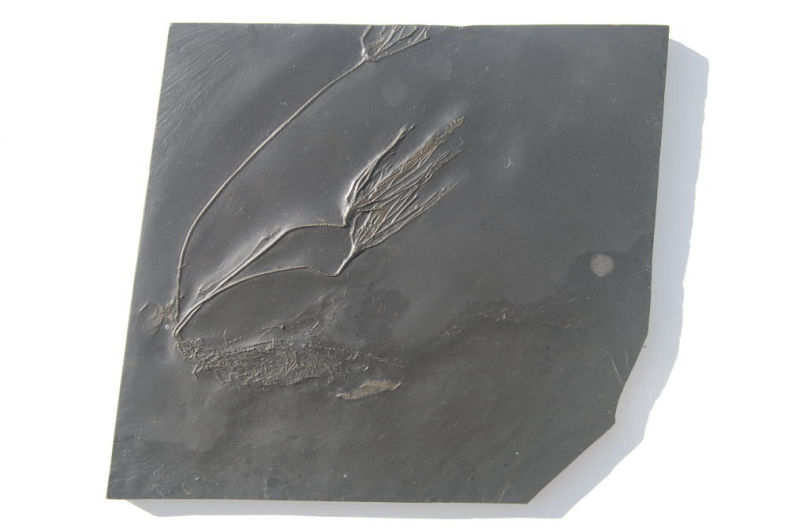
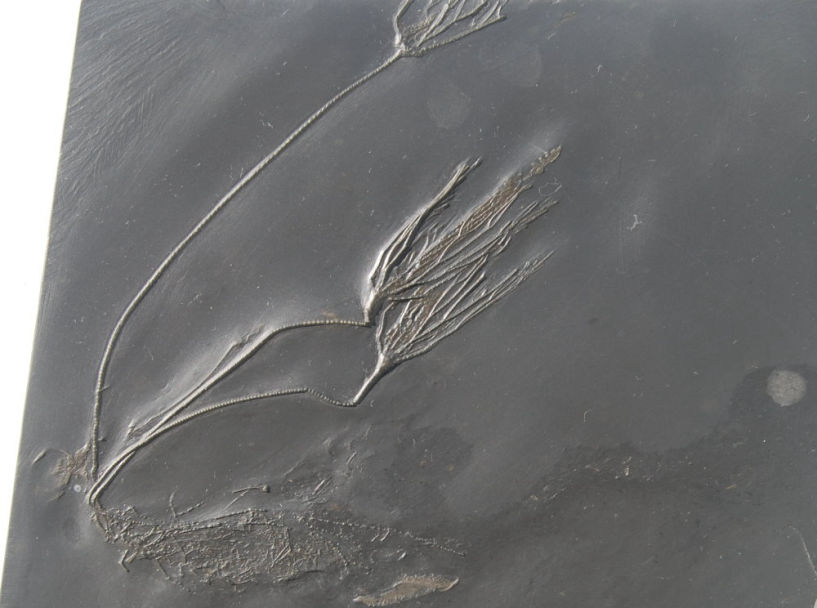
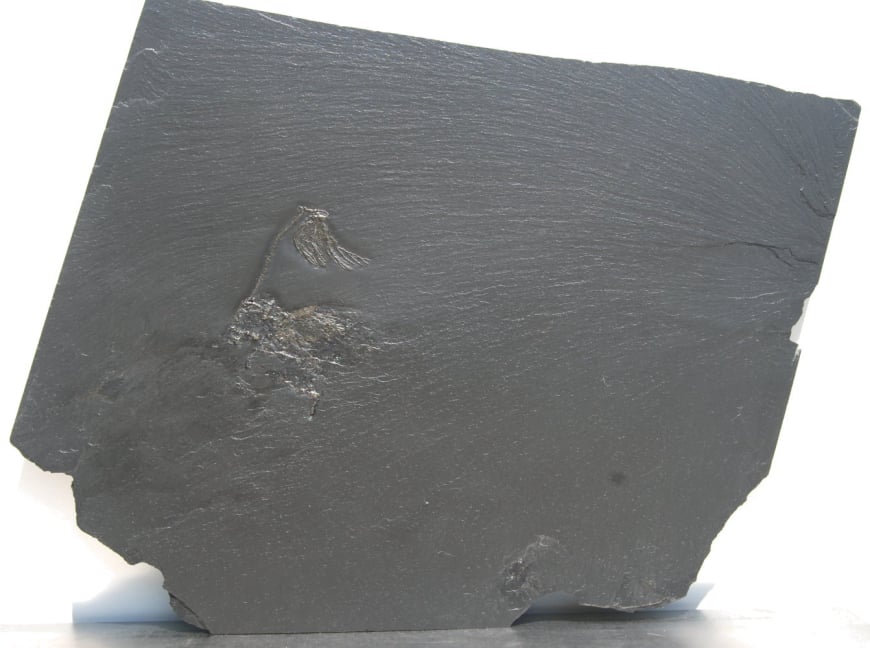
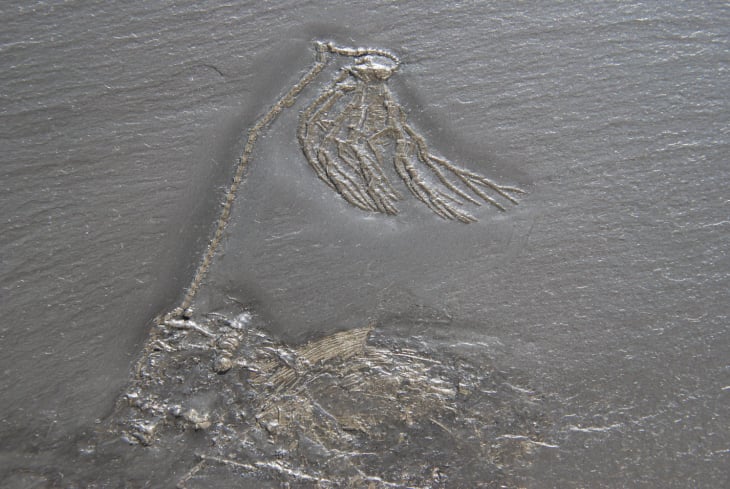
Rhadinocrinus nanus like Bactrocrinites has a long and narrow anal sac, but this is typically bent several times, but often cannot be exposed because it is hidden between the arm branches. The small calyx is also conical but not pointed, the five radial plates are wider than they are high. The slender arms are wide apart and split into two main branches with slender side branches.
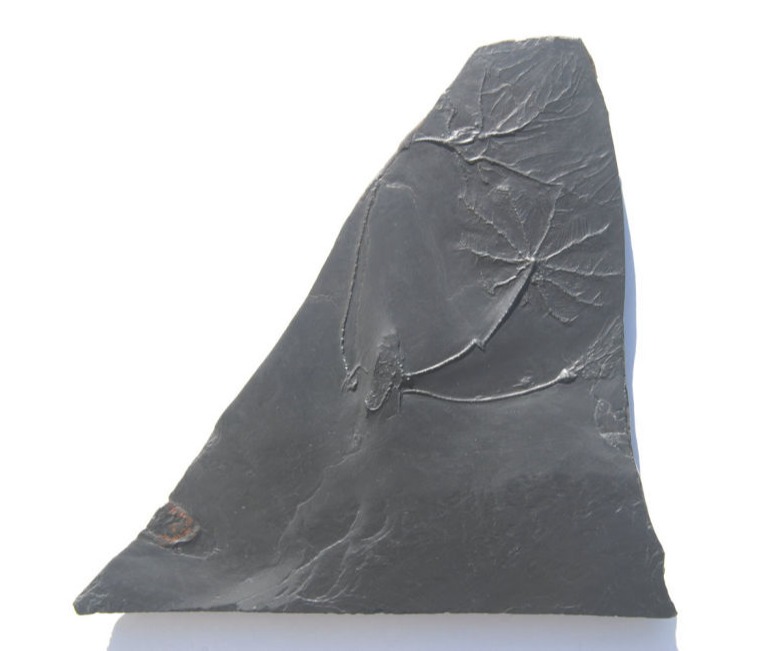
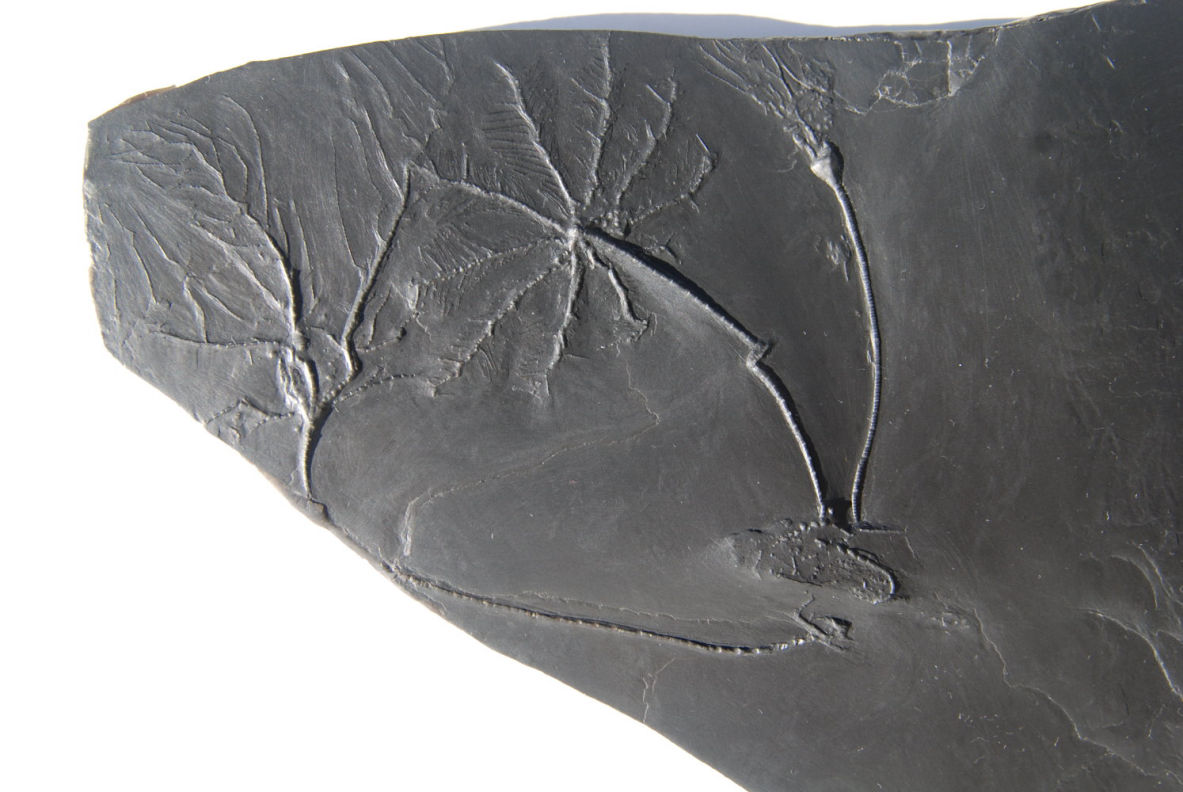
Like Bactrocrinites, Parisangulocrinus zeaeformis belongs to the Dendrocrinoidea family, i.e. the "tree-like" habit. The calyx is truncated cone-shaped as in Rhadinocrinus. However, the arms are dichotomously forked up to four times. The anal sac is long, slender, and cob-like. The species Parisangulocrinus furcaxialis differs in a pointed calyx, in Parisangulocrinus minax the anal sac extends beyond the crown.

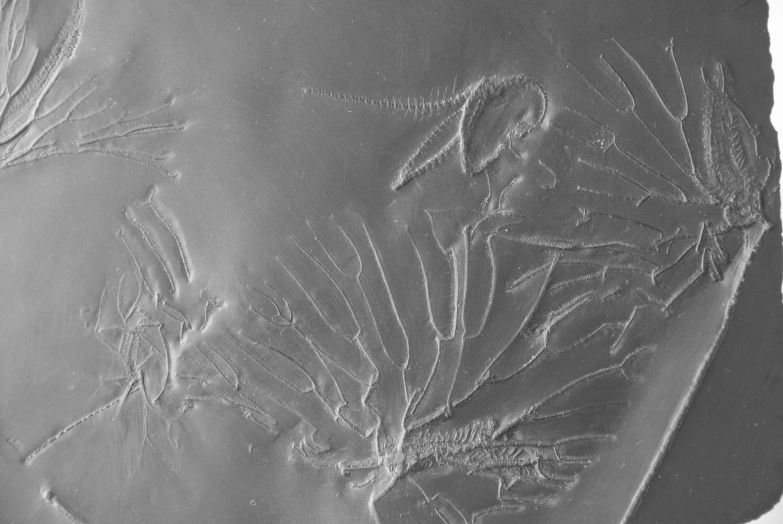
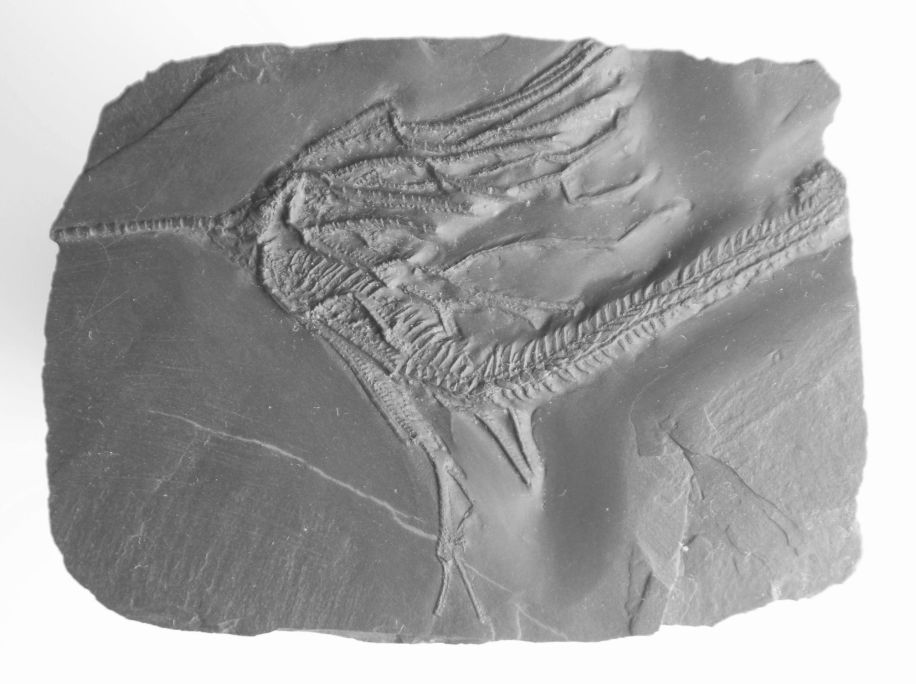
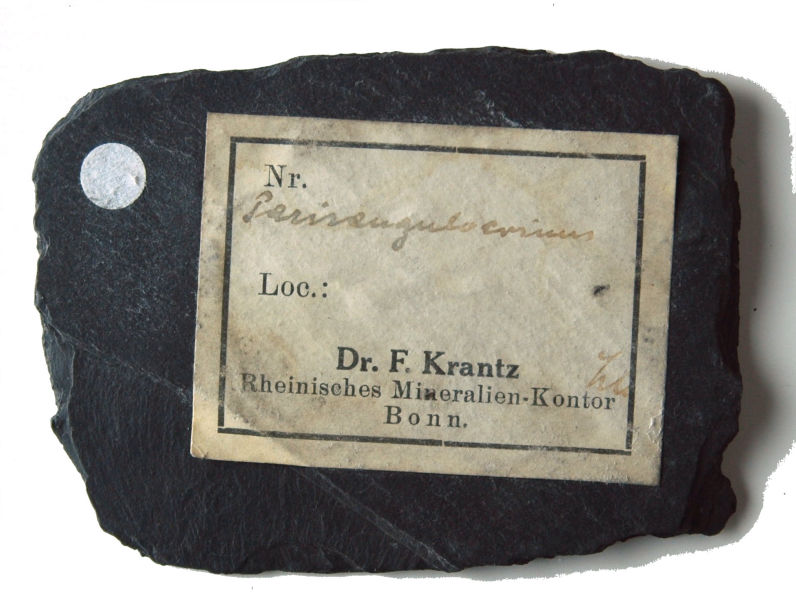
Follicrinus grabei is rarer than all of the above sea lilies and by far the largest. The ventral sac, which is designed as a balloon (Latin: follis), gives it its name. The calyx is quite small and conical. The arms are very slender, dichotomously forked up to four times, without pinnulae, up to 20 cm long. Typically, the arms are arranged in different planes, which makes the preparation challenging. In Bundenbach, Follicrinus is characteristic of the Hans plate bed, otherwise found in Rhenish (sandy) facies.
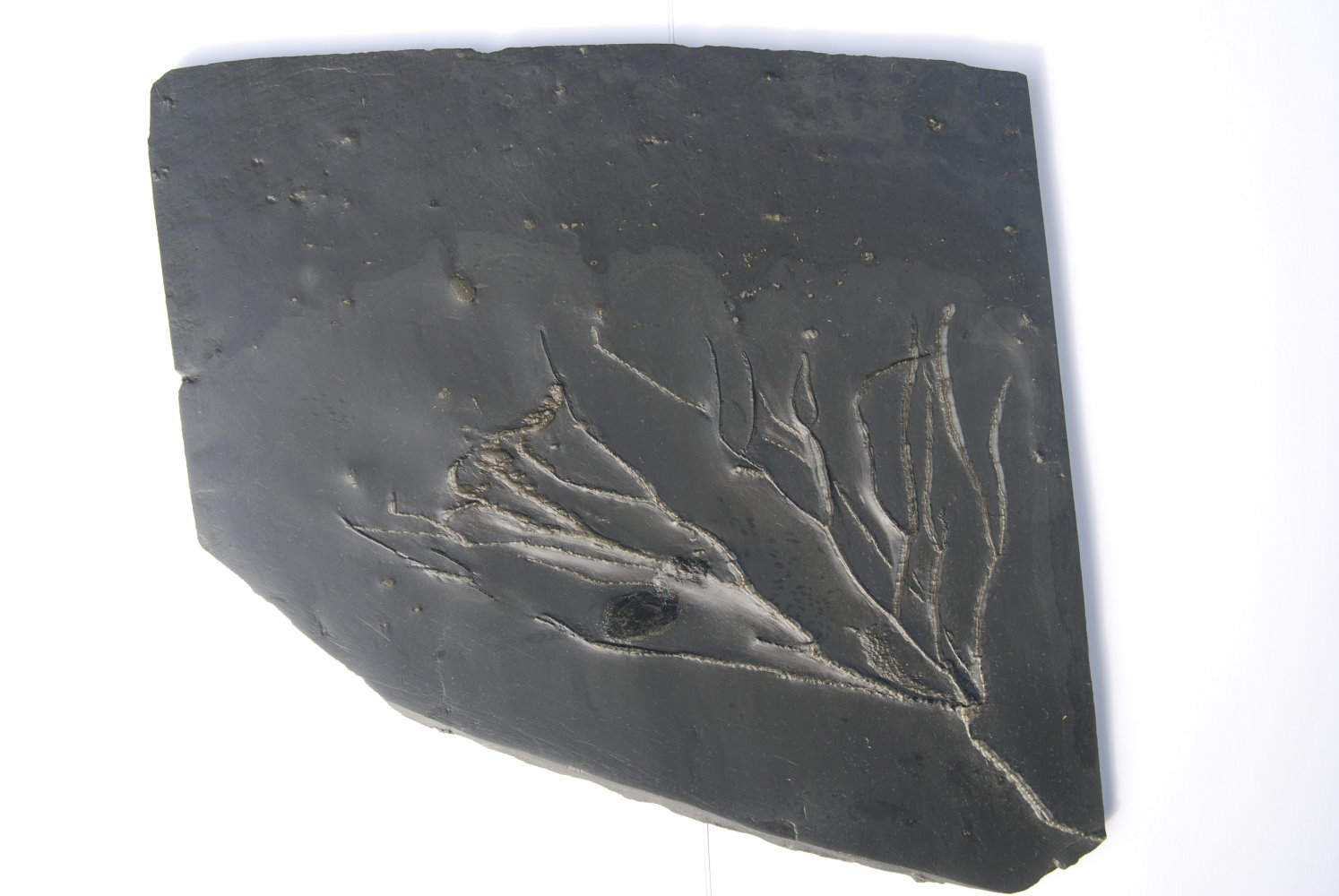
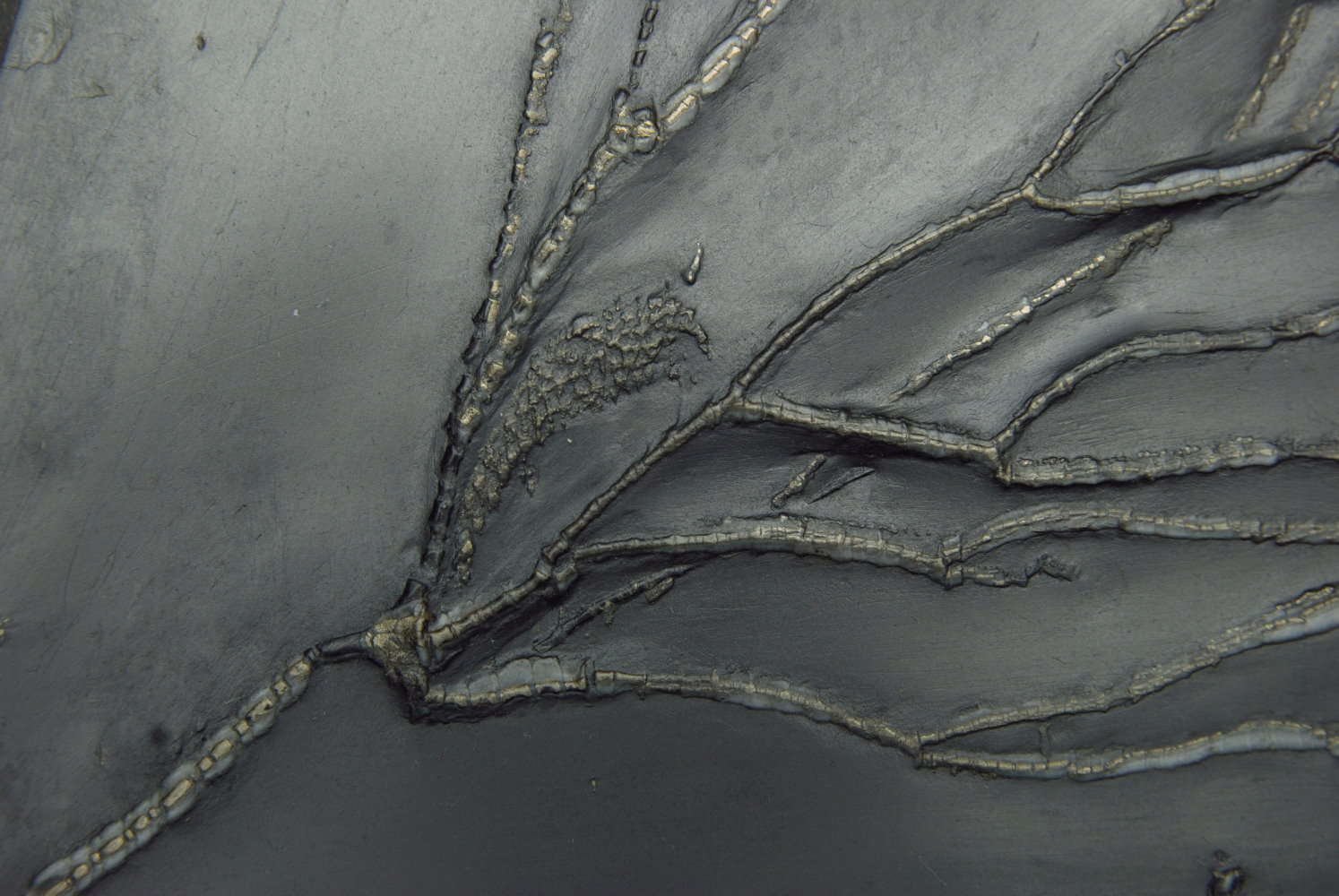
Triacrinus elongatus is a very reduced form. The small, conical calyx is formed by (eponymous) three unequal basalia and six radial plates. The arms are very long, undivided and without branches. The anal sac looks very similar. Triacrinus koeniswaldi, on the other hand, the rarer species, is stockier, the calyx is wider, the arms are shorter and the skeletal elements are thicker.
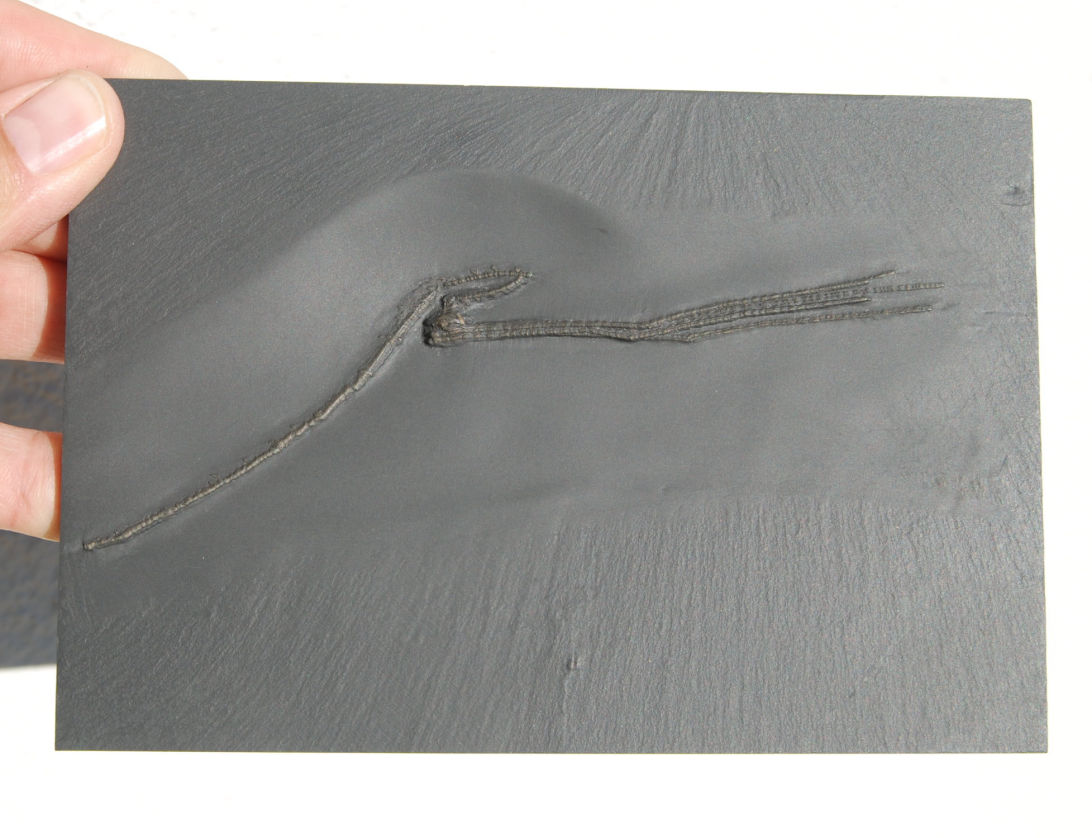
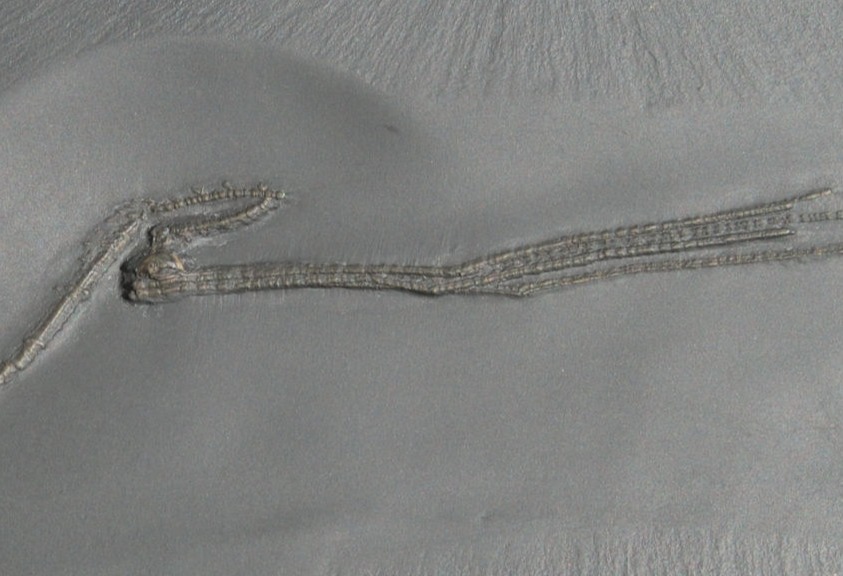
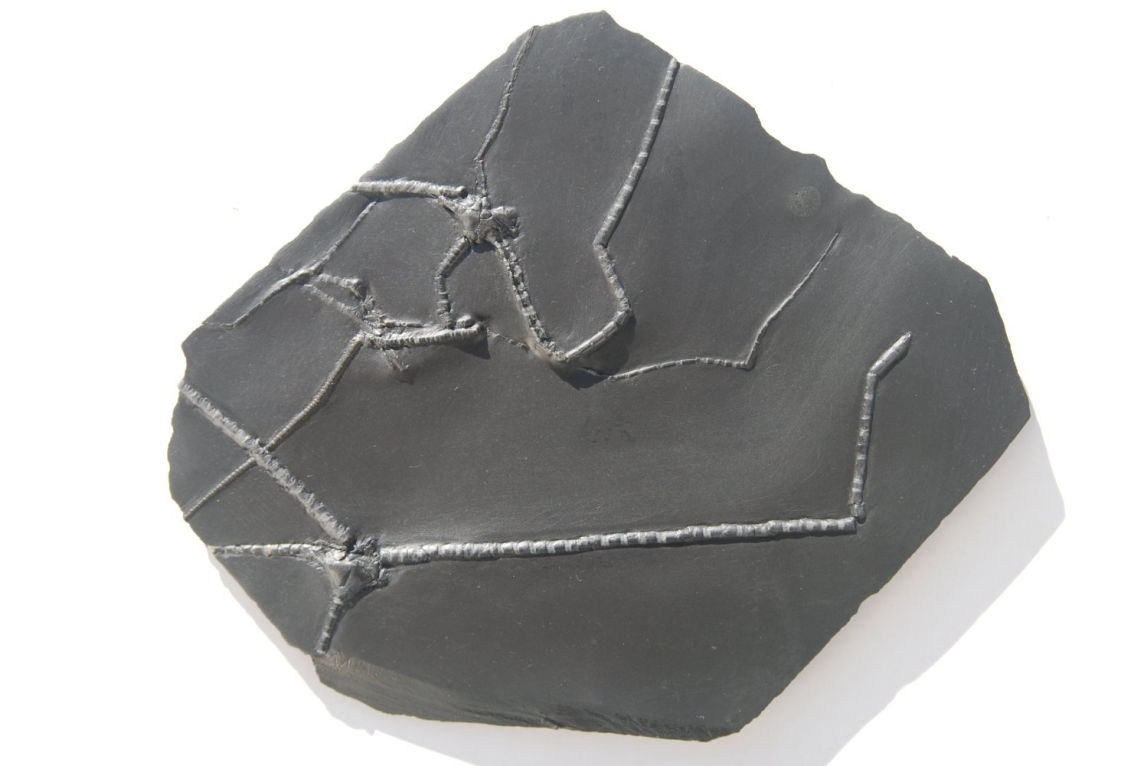
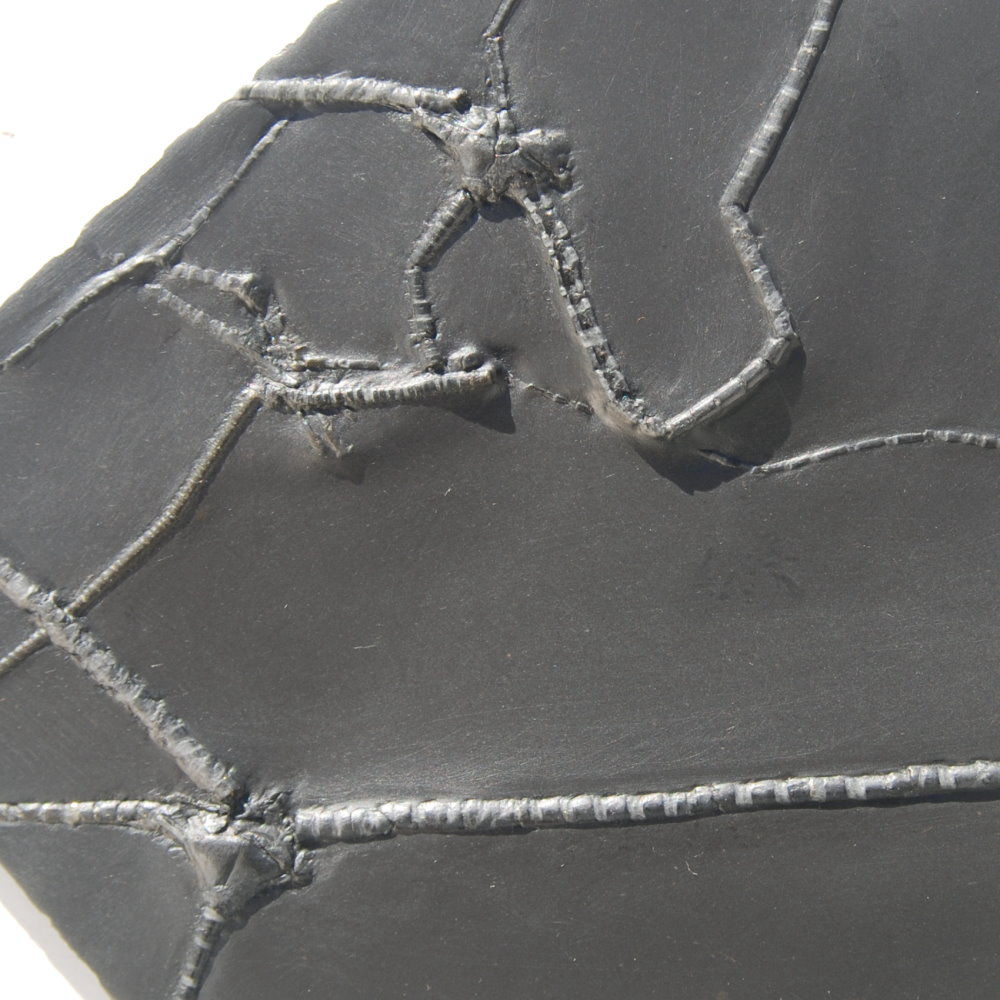
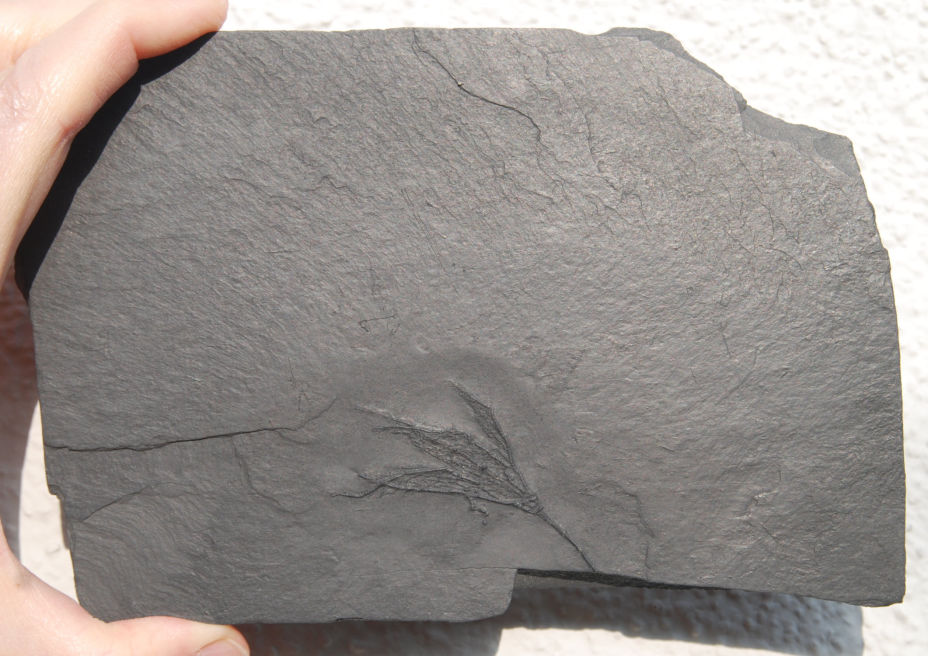
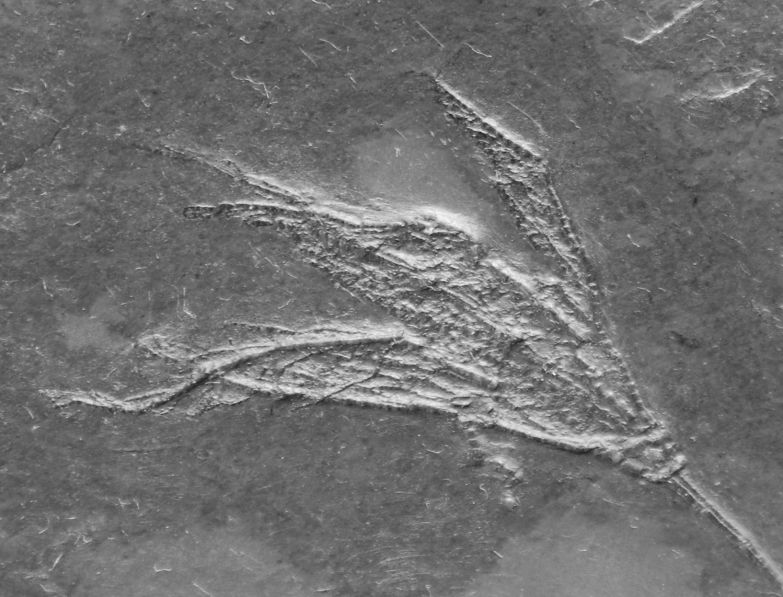
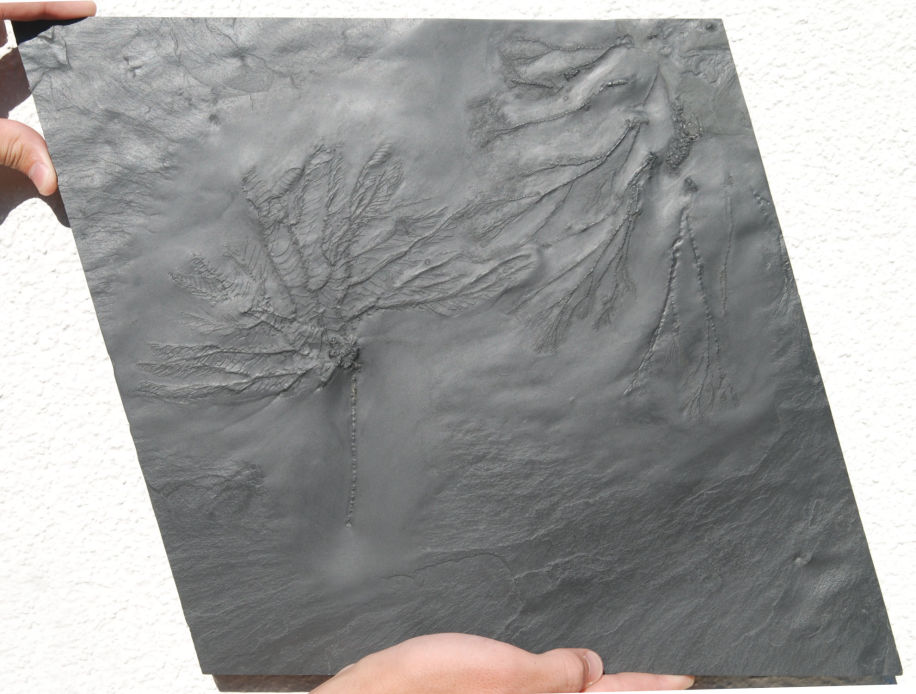
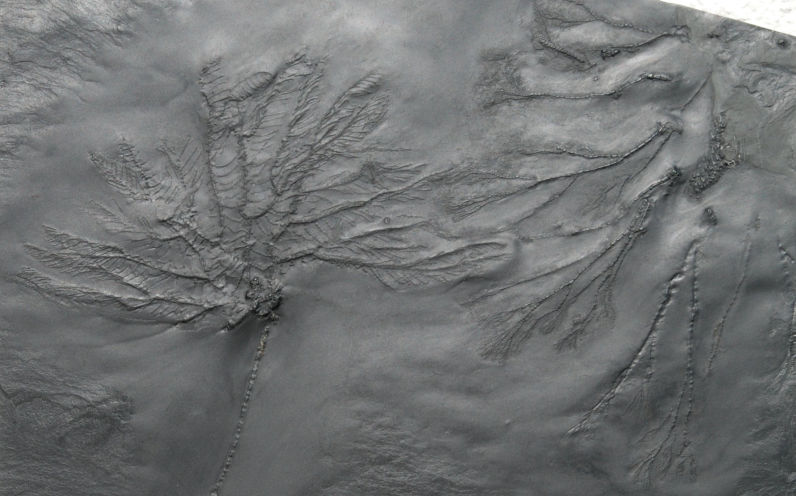
Rhenocsystis latipedunculata, like all Homolazoa, vaguely resembles crinoids thanks to the stalk (aulacophore), but lacks five-rayed symmetry. The top of Rhenocsystis consists of two central plates and 11 edge plates, the bottom of 20 plates. Two long thorns adorn the posterior end of the roughly rectangular theca. The long, spiny stem is tapered and often curved.
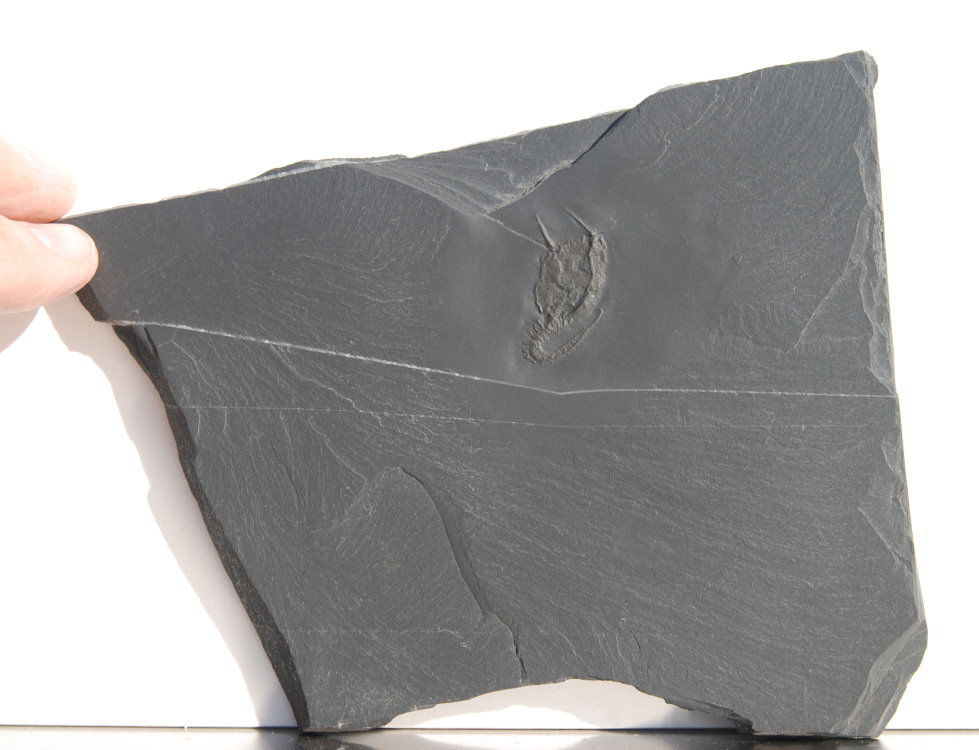
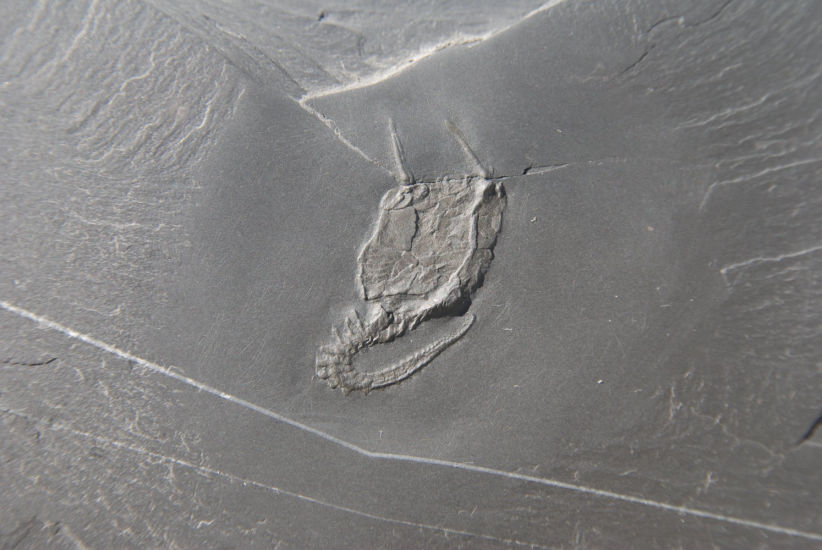
Anatifopsis styloidea (formerly: Mitrocystites) is much rarer than Rhenocsystis. The body is roughly semi-circular in shape and consists of two large plates on the underside that overlap on the top. Fine nodules are arranged at the edges on the upper side. The spined stalk also tapers. In contrast to Rhenocsystis, the strong sting is usually missing.
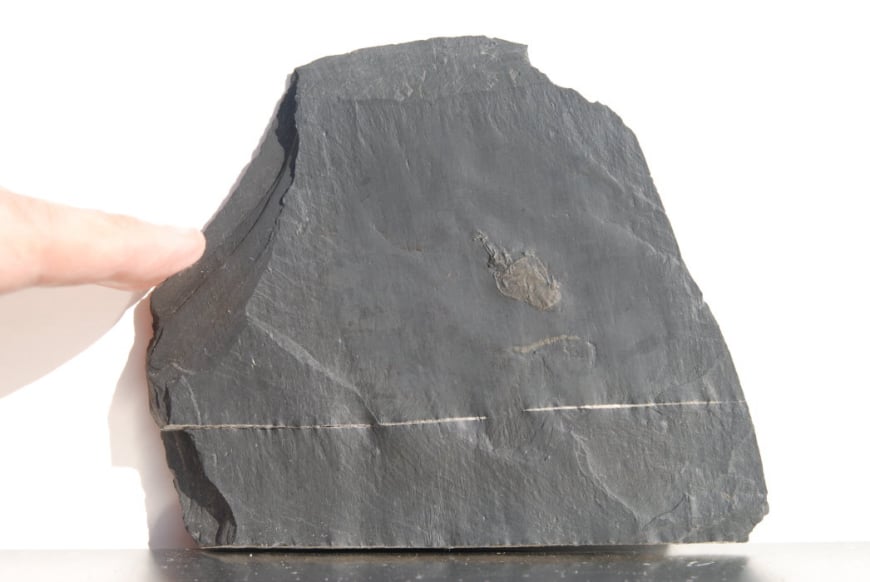
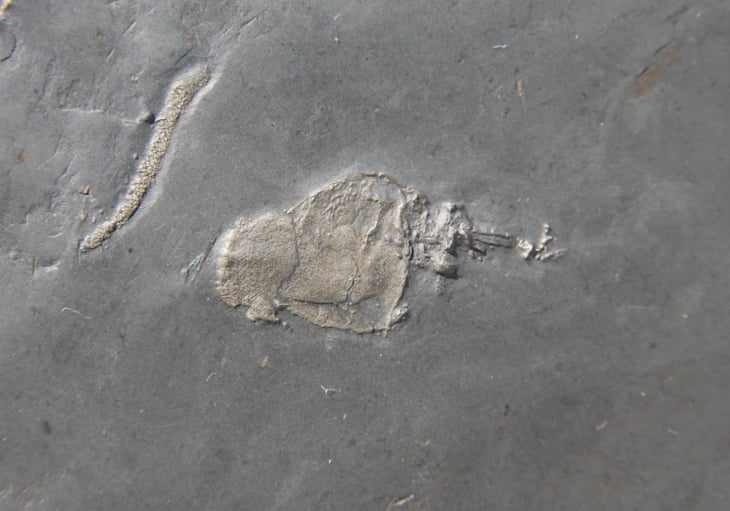
Regulaecystis pleurocystoides, only found in Bundenbach and rarely there, is one of the representatives of the cystoidea. The cup (theka) is bag-shaped and consists of polygonal plates. the anal field is bordered by marginal ridges. Regulaecystis has two strong arms (brachiola). The stem is quite long and often kinked.
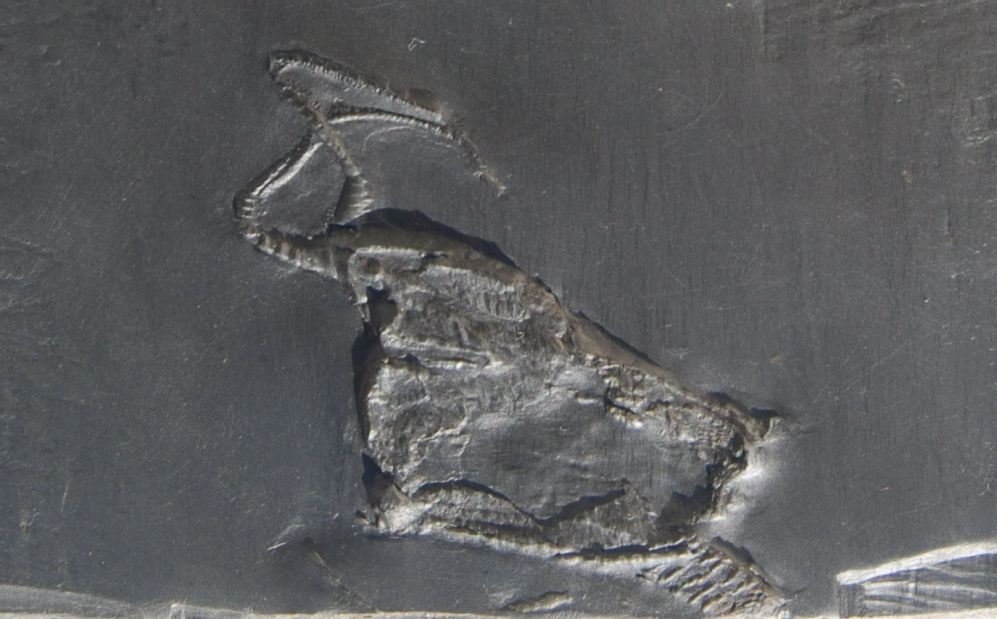
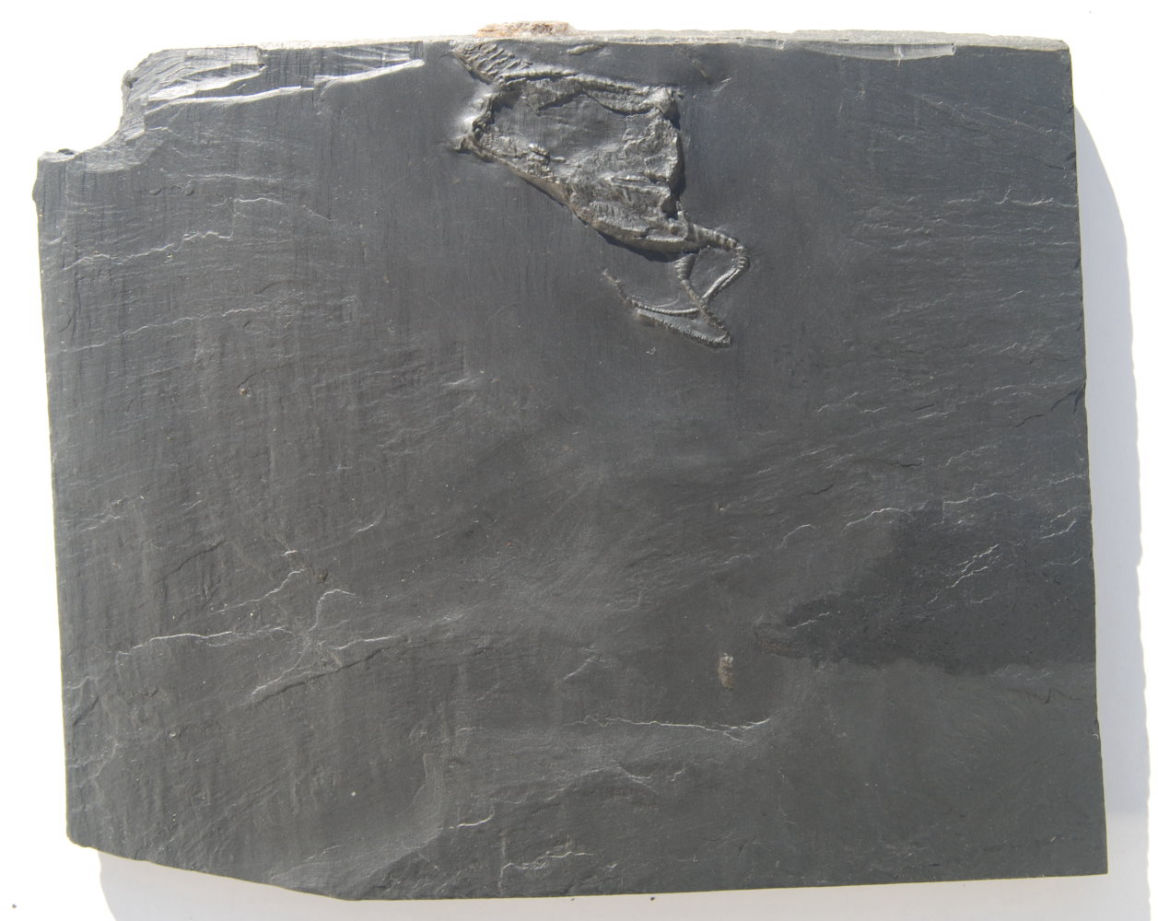
Palaeocucumaria hunsrueckiana belongs to the holothuria, rare delicacies in the Hunrueck slate. The shape is that of a cucumber (name-giving Latin: cucumis) with 25 tentacles. The oval Madropor plate proves a distant relationship with the Starfish. Sometimes isolated calcareaous rings are found.
The roofing slates of Bundenbach represent the world's most important fossil deposit for crinoids of the Paleozoic Era. Nowhere else are specimens found in this variety and condition. More than 5500 fossil species are known, of which about 700 are from the Devonian. The so far only comprehensive monograph by SCHMIDT (1934) numbers 29 genera with a total of 65 species represented in the Hunsrück slate.
An estimated 99% of all past finds are of about a dozen different species that we are able to offer from time to time. Please contact us, we will be happy to include your wishes on our list of reserved customers.
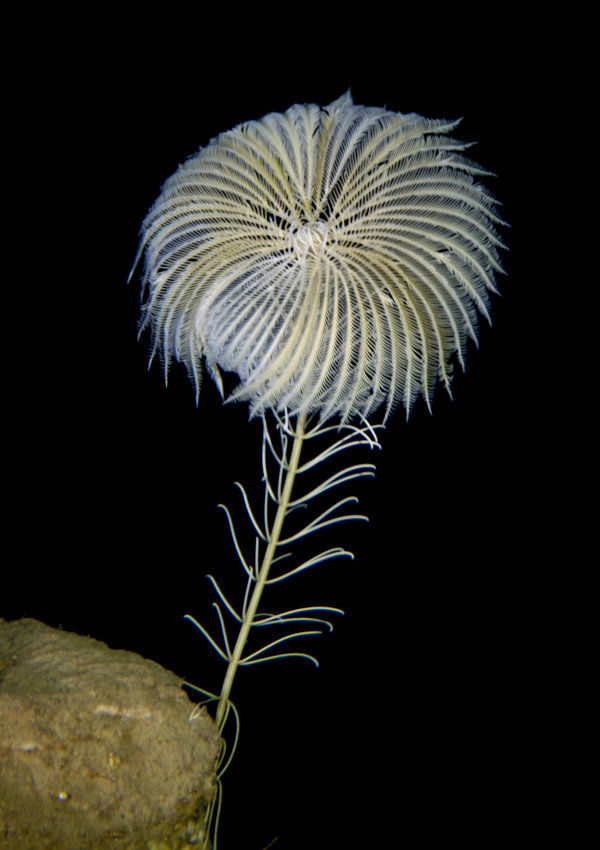
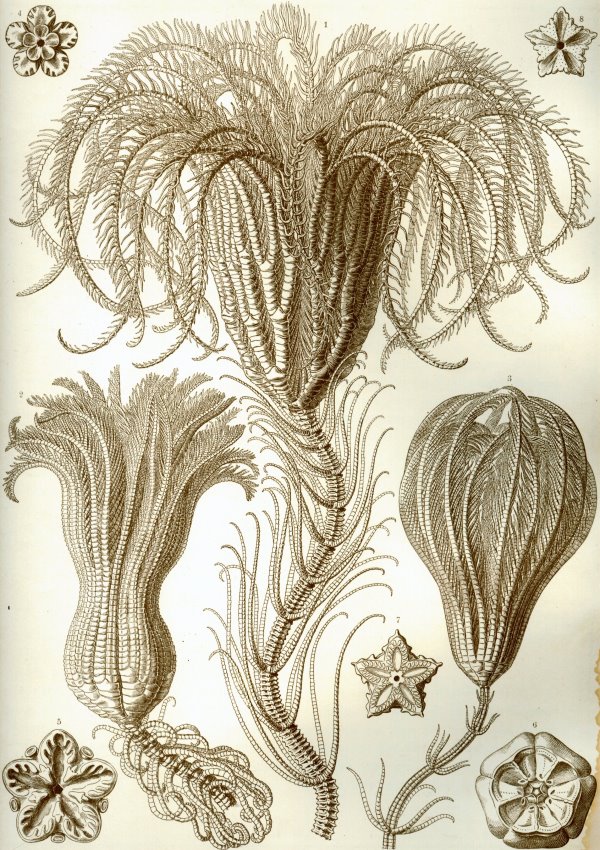
Crinoids are sometimes referred to as Sea Lillies because of their resemblance to a plant or flower. In parts of England, the columnals forming the stem are called fairy money, and star-shaped examples of these were associated with the sun by ancient peoples, and given religious significance. Robert Plot (1640—1696) named these stellate forms star stones.
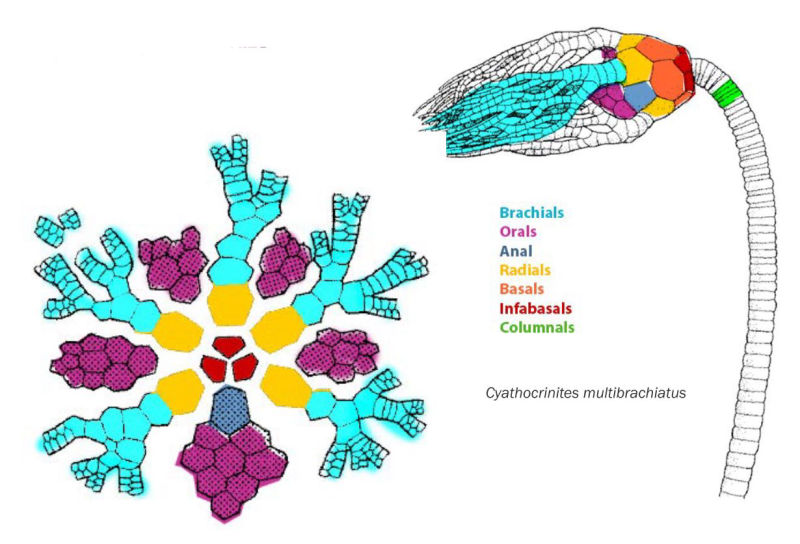
Crinoids are marine animals belonging to the Phylum Echinodermata and the Class Crinoidea. An array of branching arms (brachia) is arranged around the top of a globe-shaped, cup-like structure (calyx) containing the main body of the animal. In many fossil forms the calyx was attached to a flexible stem that was anchored to the sea bed.
The skeleton is made of the mineral calcite, and consists of hundreds of individual plates of different shapes and sizes. Decay of the soft tissue that held many of these plates together means that complete specimens are rare, but parts of the stem are common fossils.
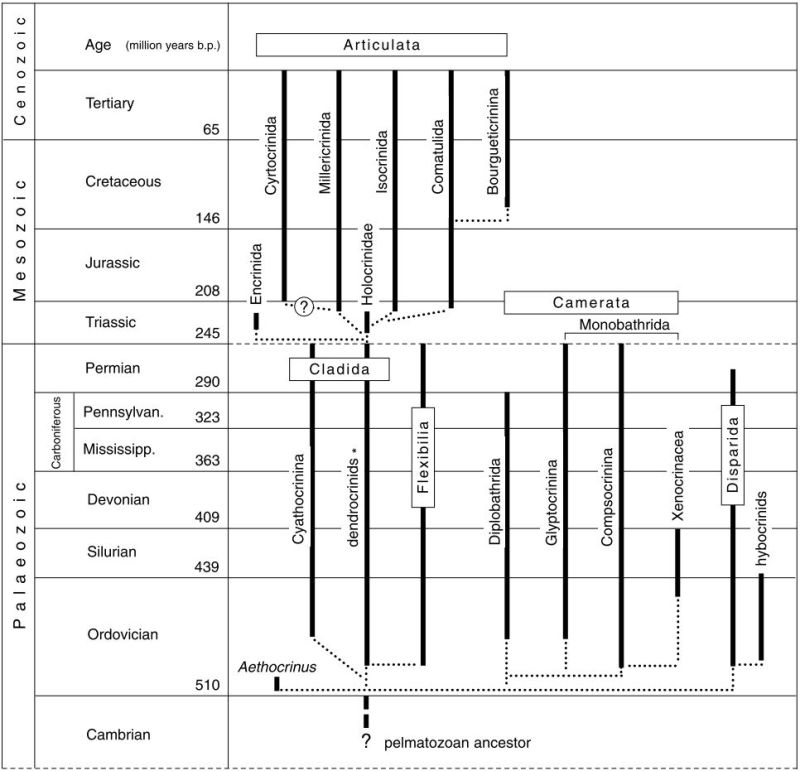
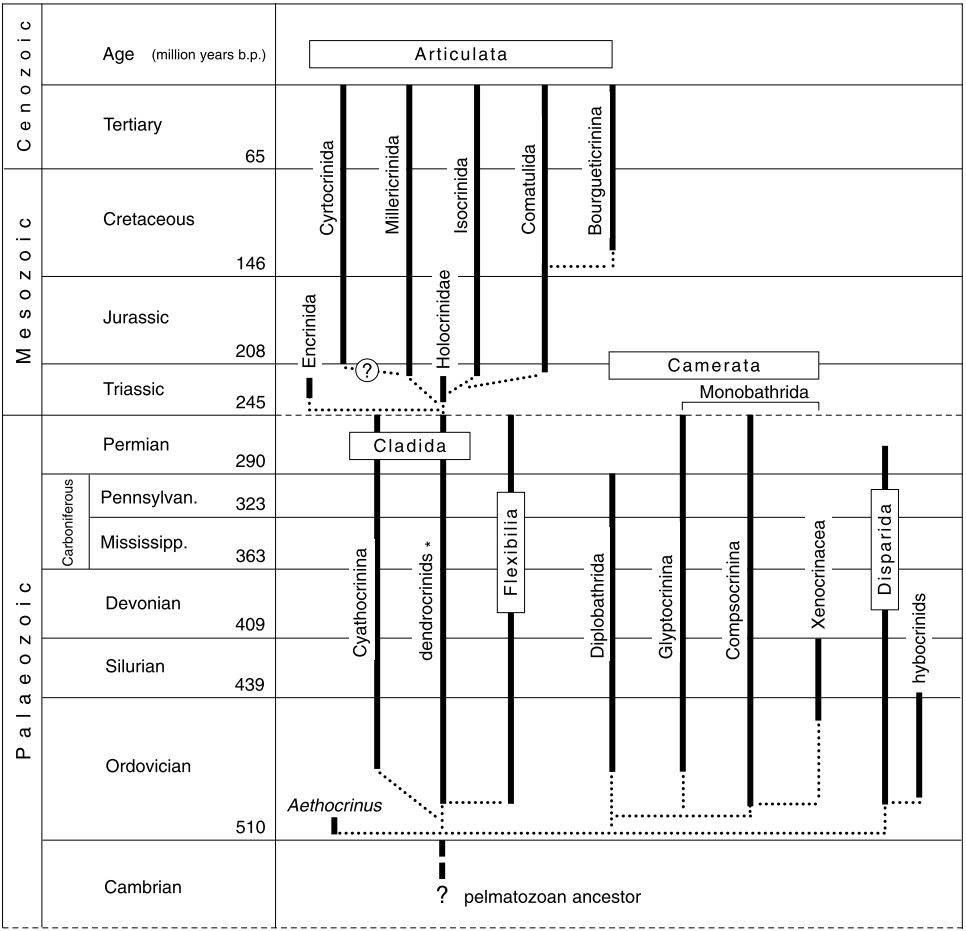
The first true Crinoids appeared during the Lower Ordovician. Following the global mass extinction at the Silurian boundary, they and underwent several major radiations at the early Devonian, Missisippian (peak) and Pennsylvanian. They almost became extinct at the end of Paleozoic Era in the Permian, but recovered to flourish again during the Mesozoic, in the Triassic and Jurassic (Lias, Dogger, Malm). Decreasing numbers in the Cretaceous, fossil record of crinoids rare in the Tertiary. More than 6,000 fossil species, belonging to more than 800 genera, have been described.
Crinoids can very basically be described as upside-down starfish with a stems. The stem of a crinoid extends down from what would be the top of a starfish, leaving the mouth of the organism opening skyward, with the arms splayed out. However, crinoid arms look articulated and feathery. The stalk extends down from the aboral surface of the calyx. The stalk column has holdfasts which attach the animal to substrate.
Today, approximately 600 living species are known; most free-living feather stars or comatulids living in the shallow seas. About 80 species of stalked sea lilies are restricted to the deeper water of today```s ocean.